


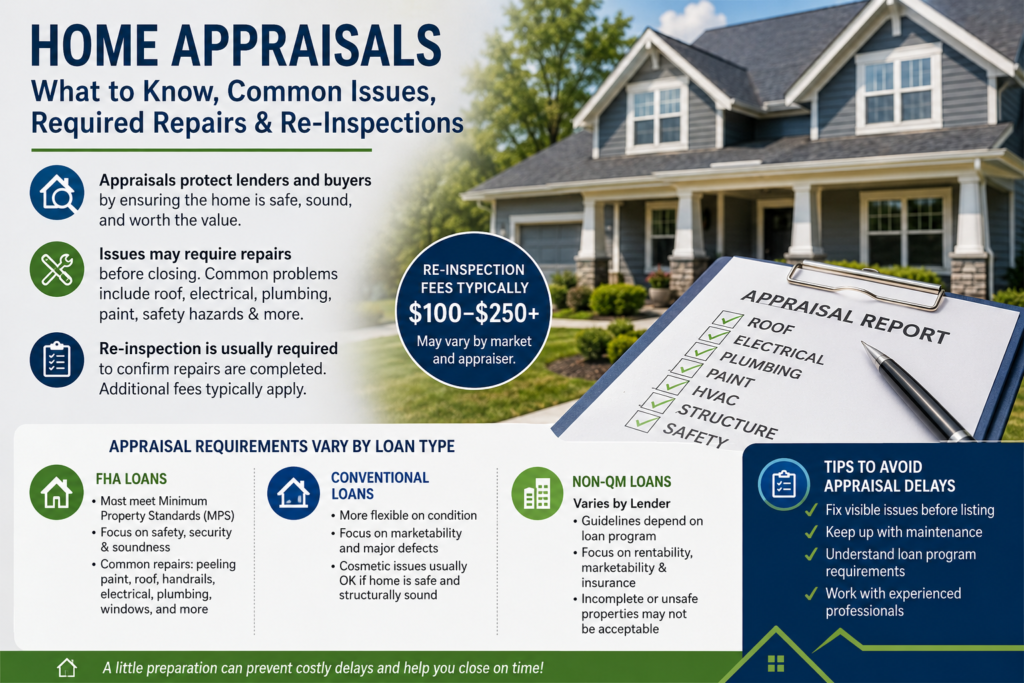
When buying or refinancing a home, one of the most important parts of the mortgage process is the appraisal. Many buyers believe the appraisal is simply about determining the property’s value, but in reality, the appraiser is also looking at the property’s condition, safety, habitability, and marketability depending on the loan type.
If issues are found during the appraisal, the lender may require repairs before the loan can close. In many cases, the appraiser must return to the property for a re-inspection to confirm the repairs were completed. This can result in delays, additional costs, and sometimes even loan denials if the issues are severe enough.
Understanding what causes appraisal problems — and how to fix them — can save buyers, sellers, and real estate agents a great deal of stress during the transaction.
What Is a Home Appraisal?
A home appraisal is an independent professional opinion of a property’s market value and condition. The lender orders the appraisal to make sure the home is worth the amount being financed and that it meets the lending guidelines for the specific mortgage program.
The appraiser evaluates:
- Property condition
- Safety concerns
- Structural integrity
- Comparable sales in the area
- Marketability
- Functional utility
- Deferred maintenance
- Health and safety hazards
The stricter the loan program, the stricter the property condition requirements usually are.
Why Appraisals Sometimes Fail
A property may fail an appraisal or receive “subject to repairs” conditions for several reasons:
Health and Safety Concerns
Lenders want to ensure the home is safe to live in. Issues that create health or safety hazards often trigger mandatory repairs.
Examples include:
- Exposed electrical wiring
- Missing electrical cover plates
- Active roof leaks
- Mold or water intrusion
- Broken windows
- Missing handrails
- Trip hazards
- Unsafe decks or stairs
- Non-working heating systems
- Plumbing leaks
- Missing smoke detectors
- Peeling lead-based paint in older homes
Structural Problems
Structural concerns can raise major red flags because they may affect the stability and long-term value of the property.
Examples include:
- Foundation cracks
- Uneven floors
- Roof sagging
- Termite damage
- Structural settlement
- Major wall cracks
- Damaged support beams
These issues often require evaluations by licensed contractors or engineers before the lender will approve the loan.
Roof and Insurance Problems
Roof issues are one of the most common appraisal conditions today, especially in states like Florida where insurance companies have tightened requirements.
Common roof-related concerns:
- Roof near end of life
- Missing shingles
- Soft spots
- Active leaks
- Flat roof deterioration
- Signs of water intrusion
Even if the lender accepts the property, the insurance company may refuse coverage until repairs or replacement are completed.
Since lenders require homeowners insurance before closing, insurance-related property issues can indirectly kill the loan.
Deferred Maintenance
Appraisers look for signs that the property has not been properly maintained.
Examples include:
- Rotten wood
- Broken fixtures
- Damaged flooring
- Missing appliances (when required)
- Unfinished renovations
- Holes in walls
- Damaged cabinetry
While some cosmetic issues may be acceptable, excessive neglect can create concerns about the overall condition of the property.
FHA Appraisals: The Strictest Property Standards
loans are well known for stricter appraisal and property condition requirements because the property must meet minimum property standards (MPS).
FHA appraisers focus heavily on:
- Safety
- Security
- Soundness
The property must be move-in ready and safe for occupancy.
Common FHA Appraisal Repair Requirements
Peeling Paint
This is extremely common in homes built before 1978 due to lead-based paint concerns.
Required remedy:
- Scrape peeling paint
- Repaint affected areas
- Properly seal surfaces
A re-inspection is usually required.
Missing Handrails
If there are three or more steps, FHA commonly requires handrails.
Required remedy:
- Install secure handrails
- Ensure they are safely attached
Roof Issues
FHA generally requires:
- No active leaks
- At least 2 years of remaining roof life
Required remedy:
- Roof repair
- Roof replacement in severe cases
Electrical Problems
Examples:
- Exposed wiring
- Unsafe breaker panels
- Missing outlet covers
Required remedy:
- Licensed electrician repairs
- Electrical certification if needed
Water Heater Issues
FHA commonly flags:
- Missing pressure relief valve
- Improper installation
Required remedy:
- Plumbing correction
- Safety compliance updates
Broken Windows and Doors
FHA requires homes to be secure and weatherproof.
Required remedy:
- Replace broken glass
- Repair damaged doors
- Ensure proper locking functionality
FHA Re-Inspection Process
After repairs are completed, the appraiser usually returns to verify the work.
This is called a re-inspection or final inspection.
Typical FHA re-inspection fees:
- $100 to $250+
- Can vary by market and appraiser
The appraiser then submits an updated report confirming whether the repairs were completed satisfactorily.
Until this happens, the lender usually cannot clear the loan for closing.
Conventional Loan Appraisals
and conventional loans are generally more flexible than FHA loans regarding property condition.
Conventional appraisals focus more heavily on:
- Marketability
- Overall collateral risk
- Major structural concerns
Minor cosmetic issues are often overlooked.
Common Conventional Appraisal Conditions
Although conventional loans are more flexible, certain issues still create problems.
Major Roof Problems
Lenders may still require repairs if:
- The roof is actively leaking
- Damage is severe
- Insurance coverage cannot be obtained
Structural Damage
Conventional lenders still take structural issues seriously.
Examples:
- Foundation movement
- Severe cracks
- Termite damage
- Unsafe additions
Often the lender requests:
- Structural engineer reports
- Contractor estimates
- Repairs before closing
Health and Safety Hazards
Examples:
- Exposed wiring
- Severe mold
- Missing flooring creating trip hazards
- Unsafe conditions
These can still trigger repair conditions.
Cosmetic Issues Usually Allowed on Conventional Loans
Unlike FHA, conventional loans may allow:
- Worn carpet
- Older kitchens
- Cosmetic cracks
- Outdated bathrooms
- Minor paint issues
As long as the home is safe and marketable.
Non-QM Appraisals
loans vary significantly because guidelines depend on the lender and program.
Non-QM lenders may finance:
- Self-employed borrowers
- Bank statement loans
- DSCR loans
- Foreign national loans
- Asset depletion loans
Property condition flexibility often depends on the lender’s risk tolerance.
Common Non-QM Appraisal Issues
Investor Property Concerns
For DSCR and investor loans, lenders heavily focus on:
- Rentability
- Marketability
- Property condition affecting income potential
Examples:
- Severe deferred maintenance
- Unsafe rental conditions
- Unfinished rehab projects
Incomplete Construction
Many Non-QM lenders will not finance homes with:
- Missing kitchens
- Missing bathrooms
- Incomplete additions
- Major renovation projects
Unless using a renovation-specific loan product.
Insurance Restrictions
Even Non-QM lenders usually require acceptable insurance coverage.
Properties with:
- Bad roofs
- Unsafe electrical systems
- Major water damage
May still require repairs before closing.
What Happens If Repairs Are Needed?
When appraisal repairs are required, several things usually happen:
1. Repairs Are Negotiated
The buyer and seller negotiate:
- Who pays for repairs
- Whether credits are allowed
- Whether the price changes
2. Repairs Are Completed
Licensed contractors may be required depending on the severity of the issue.
3. Re-Inspection Ordered
The appraiser returns to confirm repairs.
4. Loan Moves Forward
If repairs pass inspection, underwriting can continue toward closing.
Common Repairs That Trigger Re-Inspections
Some of the most common repair conditions include:
- Roof repairs
- Peeling paint
- Missing handrails
- Electrical hazards
- Plumbing leaks
- Broken windows
- Water heater corrections
- HVAC repairs
- Mold remediation
- Structural corrections
Who Pays the Re-Inspection Fee?
In many transactions:
- The buyer pays
- The seller pays
- Or the parties negotiate it
Typical re-inspection costs:
- $100 to $250+
- Larger or more complex properties may cost more
Some lenders require payment upfront before ordering the re-inspection.
How to Avoid Appraisal Problems
For Sellers
Before listing:
- Fix visible defects
- Repair roof leaks
- Touch up peeling paint
- Ensure utilities work properly
- Address safety hazards
For Buyers
Before making offers:
- Ask about roof age
- Review inspection reports carefully
- Understand loan program requirements
- Budget for possible repairs
For Realtors
Understanding loan guidelines helps prevent surprises.
For example:
- FHA buyers should avoid severely distressed properties unless using renovation financing.
- Conventional loans offer more flexibility.
- Non-QM lenders may vary greatly in repair tolerance.
Final Thoughts
Appraisals are about much more than just value. The condition of the property can significantly impact whether a loan gets approved, delayed, or denied.
FHA loans tend to have the strictest repair requirements due to safety and habitability standards. Conventional loans are more flexible but still care about structural and major condition issues. Non-QM loans can vary widely depending on the lender and program.
The good news is that many appraisal issues are repairable. Understanding common appraisal problems ahead of time can help buyers, sellers, and agents avoid delays, reduce stress, and close transactions more smoothly.
If you are buying, selling, refinancing, or investing in real estate and have questions about appraisal requirements for FHA, Conventional, DSCR, or Non-QM financing, speaking with an experienced mortgage professional early in the process can help you avoid costly surprises.